
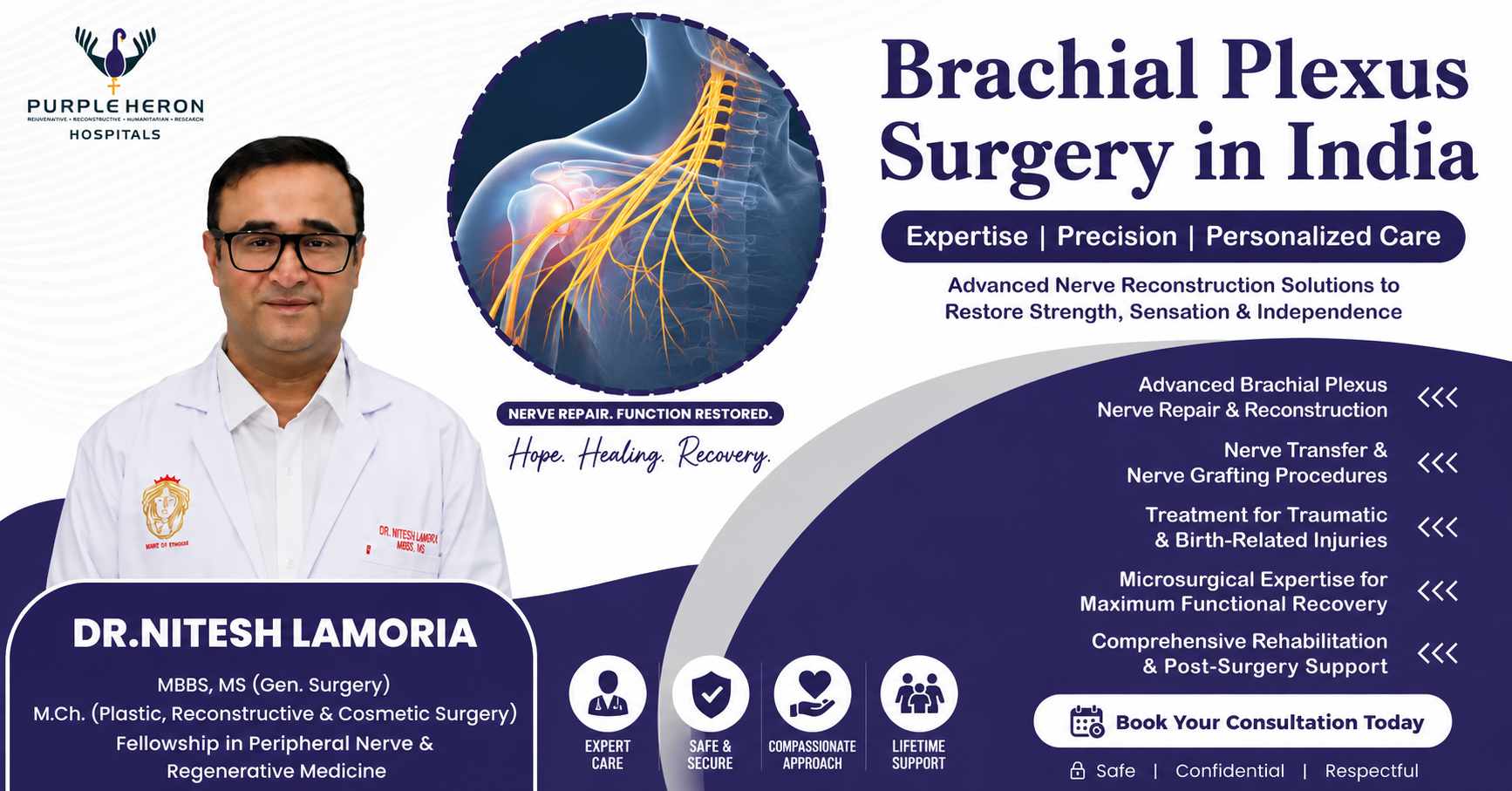
A brachial plexus injury can significantly affect a person’s ability to move the shoulder, arm, and hand. These injuries often result from road accidents, sports trauma, falls, or birth-related complications. Fortunately, advances in microsurgical techniques have made brachial plexus surgery in India highly successful, helping patients regain movement and improve their quality of life.
Dr. Nitesh Lamoria, a renowned plastic and reconstructive surgeon, offers specialized treatment for complex nerve injuries using advanced nerve repair and nerve transfer techniques.
What Is a Brachial Plexus Injury?
The brachial plexus is a network of nerves that originates from the spinal cord and controls the muscles and sensations of the shoulder, arm, and hand. Damage to these nerves can cause:
- Weakness or paralysis in the arm
- Loss of sensation
- Difficulty lifting the shoulder
- Reduced grip strength
- Persistent pain or burning sensations
Depending on the severity, the injury may involve stretching, rupture, or complete avulsion of the nerves.
Causes of Brachial Plexus Injuries
Several factors can lead to damage to the brachial plexus nerves, including:
- Motorcycle and car accidents
- Sports-related trauma
- Falls from height
- Penetrating injuries
- Birth injuries in newborns
- Industrial accidents
Early diagnosis and timely treatment are essential to achieve the best possible recovery.
When Is Brachial Plexus Surgery Needed?
Not all nerve injuries require surgery. Mild cases may recover with physiotherapy and medication. However, surgery becomes necessary when:
- There is complete nerve rupture.
- Muscle function does not improve after several months.
- Severe weakness or paralysis persists.
- Imaging studies reveal significant nerve damage.
- Conservative treatment fails.
Timely intervention can improve functional outcomes and increase the chances of restoring movement.
Types of Brachial Plexus Surgery in India
1. Nerve Grafting
In this procedure, damaged nerves are replaced with healthy nerves taken from another part of the body. Nerve grafting helps bridge gaps caused by injury and allows nerve regeneration.
2. Nerve Transfer Surgery
Nerve transfer surgery in India is one of the most effective procedures for severe brachial plexus injuries. Functional nerves from nearby muscles are redirected to restore movement in affected areas.
3. Neurolysis
Neurolysis involves removing scar tissue surrounding the nerves to improve nerve conduction and recovery.
4. Muscle Transfer Surgery
For patients with long-standing injuries, muscle transfer procedures can restore function and enhance mobility.
5. Tendon Transfer Procedures
Tendon transfers help improve arm and hand movement when nerve recovery is limited.
Why Choose India for Brachial Plexus Surgery?
India has emerged as a preferred destination for advanced nerve reconstruction procedures because of:
- Highly experienced surgeons
- Modern hospitals and surgical facilities
- Advanced microsurgical techniques
- Affordable treatment costs
- International standards of patient care
Patients from across India and abroad seek brachial plexus injury surgery in India because of the combination of expertise and cost-effective healthcare.
Dr. Nitesh Lamoria – Expert in Peripheral Nerve and Reconstructive Surgery
When looking for an experienced brachial plexus surgeon in India, many patients trust Dr. Nitesh Lamoria. He specializes in complex reconstructive and microsurgical procedures aimed at restoring function and improving quality of life.
Dr. Nitesh Lamoria focuses on:
- Peripheral nerve surgery in India
- Nerve reconstruction surgery
- Microsurgical nerve repair
- Functional restoration procedures
- Post-traumatic reconstructive surgery
His patient-centered approach and commitment to advanced surgical techniques have helped numerous individuals recover from debilitating nerve injuries.
Recovery After Brachial Plexus Surgery
Recovery following surgery requires patience and a comprehensive rehabilitation program. Most patients benefit from:
- Physiotherapy and occupational therapy
- Muscle strengthening exercises
- Regular follow-up evaluations
- Pain management strategies
Nerve regeneration is a gradual process, and noticeable improvements may take several months. In some cases, recovery continues for up to two years after surgery.
Success Rate of Brachial Plexus Surgery
The outcome of surgery depends on several factors, including:
- Severity of injury
- Time elapsed before surgery
- Patient’s age
- Rehabilitation compliance
- Type of surgical procedure performed
Early surgical intervention generally provides better results. Advances in microsurgery have significantly improved the success rates of nerve reconstruction surgery in India, allowing many patients to regain meaningful function.
How Is Brachial Plexus Injury Diagnosed?
Doctors may recommend:
- MRI scans
- CT myelography
- Electromyography (EMG)
- Nerve conduction studies
- Physical examination
These investigations help determine the extent of nerve damage and guide treatment planning.
Conclusion
A brachial plexus injury can be life-changing, but timely treatment and expert care can make a remarkable difference. Brachial plexus surgery in India offers advanced solutions for restoring movement and improving quality of life. With expertise in microsurgical reconstruction and peripheral nerve procedures, Dr. Nitesh Lamoria provides comprehensive care tailored to each patient’s condition.
If you or a loved one is experiencing weakness, numbness, or loss of arm function due to a nerve injury, consulting an experienced specialist can help determine the most effective treatment options and maximize the chances of recovery.
For More Infornmation – Blog.drniteshlamoria.com